Bangkok is the Artist
A few months ago, I met a local event organizer in Bangkok. During our conversation, he said something that has stayed with me:
"My biggest competition is Netflix."
His goal wasn't simply to host events. It was to build community and encourage people to leave their homes and connect with one another.
I understood exactly what he meant.
There have been plenty of evenings when I've stayed home, binge-watching a series because it was easy. I didn't have to make plans, leave my apartment, or risk being uncomfortable. I had endless entertainment at my fingertips.
It's fascinating how often we choose the path of least resistance.
Lately, I've been reading The Nervous System Reset, and one idea has especially resonated with me. The author suggests that many of our physical and emotional struggles stem from a dysregulated nervous system. When we're constantly living in survival mode, parts of ourselves begin to shut down. Curiosity, creativity, play, and wonder become less accessible because our energy is focused on simply getting through the day.
Healing, then, isn't only about reducing stress. It's also about reclaiming the parts of ourselves that have been waiting quietly beneath the surface.
For me, that has become part of my self-care.
Instead of only asking, "What helps me relax?" I've started asking, "What helps me come alive?"
That question led me to Dib Bangkok.
Dib Bangkok is one of Thailand's newest contemporary art museums, led by Purat (Chang) Osathanugrah and Dr. Miwako Tezuka. Their mission is to shape the future of contemporary art in Thailand and beyond, bringing together artists whose work invites visitors to experience more than what can simply be seen.
The current exhibition, Invisible Presence, features 81 works by 40 contemporary artists. Through sound, scent, light, and unconventional materials, the exhibition asks us to notice what often goes unseen.
From the moment I entered, I understood this wasn't going to be a passive museum visit.
The first installation invited visitors to strike a steel bat against a white wall. The sound lingered for what felt like thirty seconds, vibrating through the room—and through my body.
Immediately, I thought about words.
How they linger.
How they can heal.
How they can wound.
Another installation transformed discarded metal trash into something almost beautiful beneath a chandelier, making me reflect on consumerism and the things we choose to value. An altar with a metal detector referenced the 2015 Charleston church shooting. A bed frame filled with butterflies that lifted on a timer became a meditation on mortality, illness, and the limits we place on our lives.
One floor featured the work of Montien Boonma, whose art became an ongoing prayer following the loss of his wife. His sculptures explored grief, spirituality, breath, and the fragility of the human body.
Each piece seemed to ask the same question in a different language:
What does it mean to be human?
When I was in high school, I studied the humanities.
Back then, I thought it simply sounded academic.
Now I understand.
Art.
Philosophy.
Literature.
Film.
Music.
These are not luxuries.
They are records of what it means to love, grieve, question, celebrate, and survive.
Walking through the museum, I found myself wishing someone was there to guide me. I wanted another perspective. Someone to challenge what I was seeing or help me notice what I might have missed.
Then I realized something.
What I wasn't looking for was information.
I was looking for conversation.
Art invites dialogue. It asks us to bring ourselves into the experience, not just observe it.
As I read the descriptions beside each piece, I noticed how many of the artists were processing grief, anger, hope, joy, or uncertainty. Their work wasn't about having answers. It was about giving form to experiences that are often difficult to put into words.
That inspired me.
Artists live by their own rules because they trust their vision enough to create it.
There is something deeply courageous about that.
So I continue seeking places that are beautifully uncomfortable—places that stretch me, challenge me, and remind me there is still so much of myself left to discover.
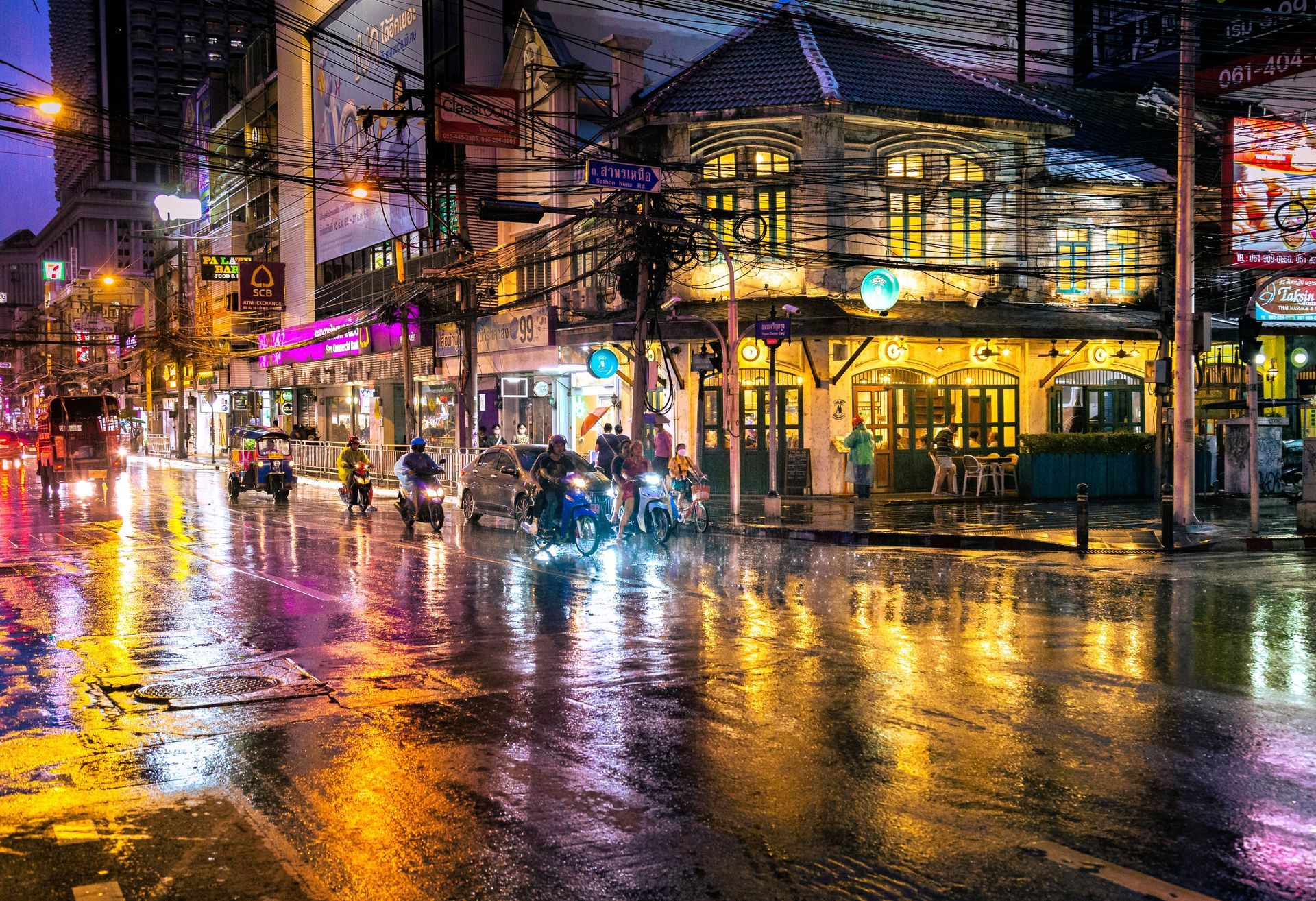
Perhaps that's why I love Bangkok so much.
It's more than a city.
Bangkok is the artist.
Initiatives